
Indonesia’s rental property market continues to attract investors looking for recurring income from residential assets. As of Q3 2026, the country’s average gross residential rental yield stood at 8.22%, according to Global Property Guide, with some Jakarta apartment segments recording double-digit gross yields.
But traditional apartments are not the only rental strategy available to property owners. Coliving is emerging as another way to turn residential real estate into an income-producing asset, particularly in urban areas where demand for flexible, well-located accommodation continues to grow.
By combining multiple rentable rooms with shared amenities, professional management, and a rental model designed around monthly occupancy, a well-planned coliving property can potentially generate more revenue from the same building footprint than a conventional single-unit rental. For investors, however, the opportunity is not simply about building more rooms, the numbers need to work from the beginning, including land cost, construction, room configuration, furnishing, occupancy, rental rates, operating expenses, and the eventual payback period.
This guide breaks down the key numbers behind coliving investment in Indonesia, from rental yields and development costs to ROI and payback periods. It also walks through the process of turning a piece of land into a fully operating rental asset, so investors can understand the costs, decisions, and operational considerations involved before starting a project.
Why Coliving Is Emerging as a High-Yield Asset in Indonesia
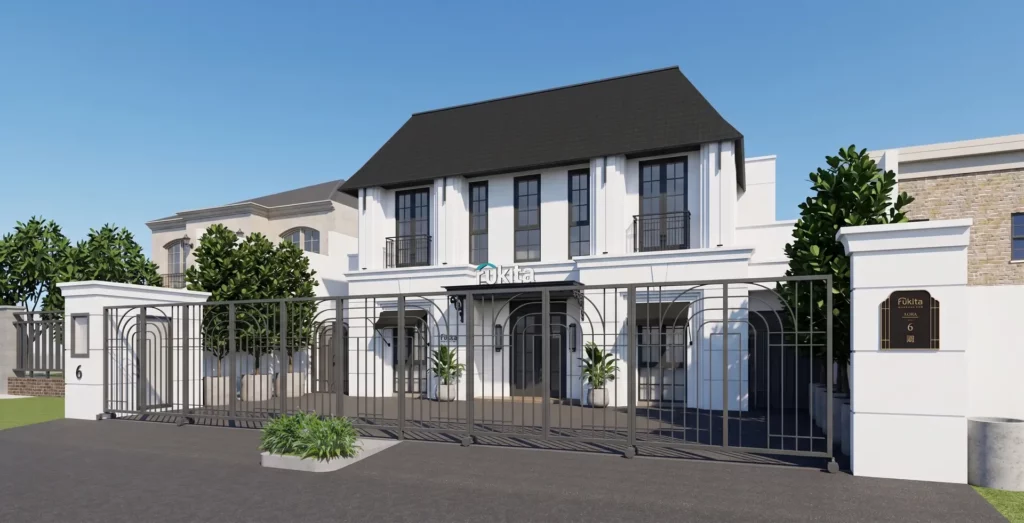
The fundamental appeal of coliving is relatively straightforward: one property can generate rental income from multiple tenants at the same time. Instead of leasing an entire house or apartment to one tenant, a coliving property divides the asset into individual rooms while retaining shared facilities such as kitchens, living areas, workspaces, laundry facilities, and other amenities.
This creates a different revenue structure from traditional residential property. For example, a house that generates Rp15 million per month when rented as a single property has one source of rental income, while a 10-room coliving property with an average room rate of Rp2.5 million could theoretically generate Rp25 million in monthly room revenue at full occupancy.
Of course, the second model also comes with higher operating costs, furnishing requirements, maintenance, marketing, and tenant management. The point is not that more rooms automatically mean better returns, but that the revenue potential per property can be significantly different when the asset is designed around room-by-room rental.
Location is another important factor in the coliving model. Coliving works best when there is consistent demand from people who need flexible, convenient accommodation, particularly in areas near business districts, universities, public transportation, hospitals, and lifestyle hubs where there is a large potential tenant pool.
The model also benefits from professional operations, as pricing, digital marketing, tenant screening, maintenance, cleaning, and tenant experience can all influence occupancy and retention. For an investor, this means a coliving property should be viewed less like a passive building and more like an operating rental business backed by real estate.
Coliving vs. Traditional Rental: Rental Yields Compared
Rental yield is one of the simplest ways to compare the income potential of different property investments. In Indonesia, the average gross residential rental yield was 8.22% in Q3 2026, although yields vary considerably between cities and property types. Global Property Guide reports average yields of around 7.69% in South Tangerang, 7.57% in Surabaya, and 9.61% in Tangerang.
Jakarta also shows a wide spread depending on property type and location. In South Jakarta, for example, reported gross yields range from 7.63% for three-bedroom apartments to 9.42% for two-bedroom apartments, while some other Jakarta apartment segments can reach above 10%.
| Property model | Main income driver | Key yield considerations |
|---|---|---|
| Traditional house rental | Whole-property rent | Land value, location, annual rent |
| Apartment rental | Unit rent | Purchase price, service charges, location |
| Coliving | Multiple room rents | Room rate, number of rooms, occupancy, operating costs |
The important difference is that coliving economics are not directly comparable to an apartment yield calculated from a single unit purchase price. A coliving investment needs to account for the entire development cost, including land, construction, furnishing, shared facilities, professional fees, and operating setup.
The revenue side also needs to be modelled differently. Instead of asking, “What rent can this property achieve?”, an investor should ask how many rentable rooms the site can support, what monthly rent each room can command, what occupancy rate is realistic, and how much revenue will ultimately remain after operating costs.
That is where a feasibility study becomes particularly important. A property with 20 rooms at a high occupancy rate may have very different economics from a 10-room property on the same land, even if both are located in the same neighbourhood.
And while gross yield is useful for an initial comparison, it is not the same as the investor’s actual return. Global Property Guide notes that net yields are typically around 1.5–2 percentage points lower than gross yields after costs such as repairs, taxes, and other expenses.
For coliving, the gap can be even more important because the asset requires ongoing management and tenant-facing operations. Investors therefore need to look beyond headline rental yields and understand the relationship between revenue, operating costs, capital expenditure, and the total amount invested.
What It Costs to Build a Coliving Property
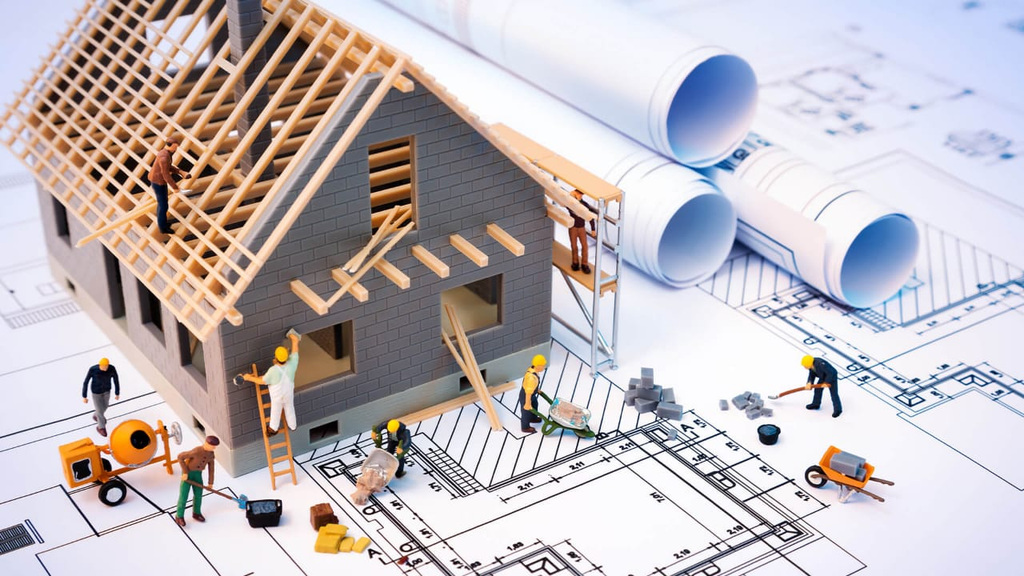
The cost of developing a coliving property depends heavily on the location, land, building size, number of floors, construction specification, room configuration, and level of amenities. There is no single “cost per room” that applies to every project, so a more useful approach is to break the investment into several major components.
1. Land
If the investor does not already own the land, acquisition can become one of the largest components of total project cost. The price can vary dramatically even within the same city, with land near offices, universities, transport hubs, and established commercial areas generally commanding a premium.
However, higher land prices do not automatically make a project less attractive. Those locations may also support higher rental rates and stronger occupancy, which is why the land acquisition cost needs to be assessed together with the property’s potential rental revenue.
For this reason, the cheapest land is not necessarily the most attractive investment. The right question is whether the land can support a development with enough rental revenue to justify its total acquisition and development cost.
2. Construction
Construction costs depend on the size and specification of the building. As a 2026 benchmark, BERM estimates standard kost construction in Jakarta at approximately Rp5.5 million–Rp6.5 million per square metre, excluding several additional components such as furnishing and certain installations.
For a simple illustration, a 500-square-metre building at Rp6 million per square metre would have an estimated construction cost of Rp3 billion. This should only be treated as an initial planning benchmark rather than a contractor quotation, as actual costs can change based on structural requirements, site conditions, architectural design, materials, building systems, and project location.
A coliving project may also require a higher specification than a basic kost because the asset needs to compete on room quality, shared spaces, security, connectivity, and tenant experience. The additional investment therefore needs to be evaluated against the rental premium and occupancy it is expected to support.
3. Furnishing and Facilities
A rental-ready coliving property needs more than walls and bedrooms. Depending on the positioning, investors may need to budget for beds, wardrobes, desks, air conditioning, water heaters, curtains, bathroom equipment, kitchen appliances, common-area furniture, internet infrastructure, security systems, laundry facilities, and other amenities.
The cost should be evaluated based on the target rental rate and tenant profile. Spending more on interiors does not automatically produce a proportional increase in rental income, so the objective should be to create the right product for the target market while protecting the project’s investment return.
4. Professional Fees, Permits, and Other Costs
The development budget should also include architectural and engineering work, permits and legal requirements, project management, utility connections, and other professional services. These costs are easy to overlook when investors focus primarily on construction, but they can have a meaningful impact on the final capital requirement.
A complete development budget should therefore account for all costs required to take the project from an empty site to a rental-ready property. Looking only at the construction cost can make the initial investment appear lower than it actually is.
5. Contingency
Finally, a development budget should include a contingency allowance. Construction projects can encounter design changes, material price movements, site conditions, or additional works that were not visible during the initial planning stage.
Keeping contingency in the financial model helps prevent unexpected costs from immediately affecting the project’s projected return. For investors, the key takeaway is simple: the cost of building a coliving property is not the same as the cost of constructing the rooms.
The investment needs to cover everything required to deliver a rental-ready asset, from the initial feasibility study and design to construction, furnishing, leasing, and ongoing operations. This is also where a Build to Rent approach can create value, as the property is planned from the beginning around its intended rental market, operating model, and return objectives rather than being designed first and commercialised later.
What Is BERM Build to Rent?
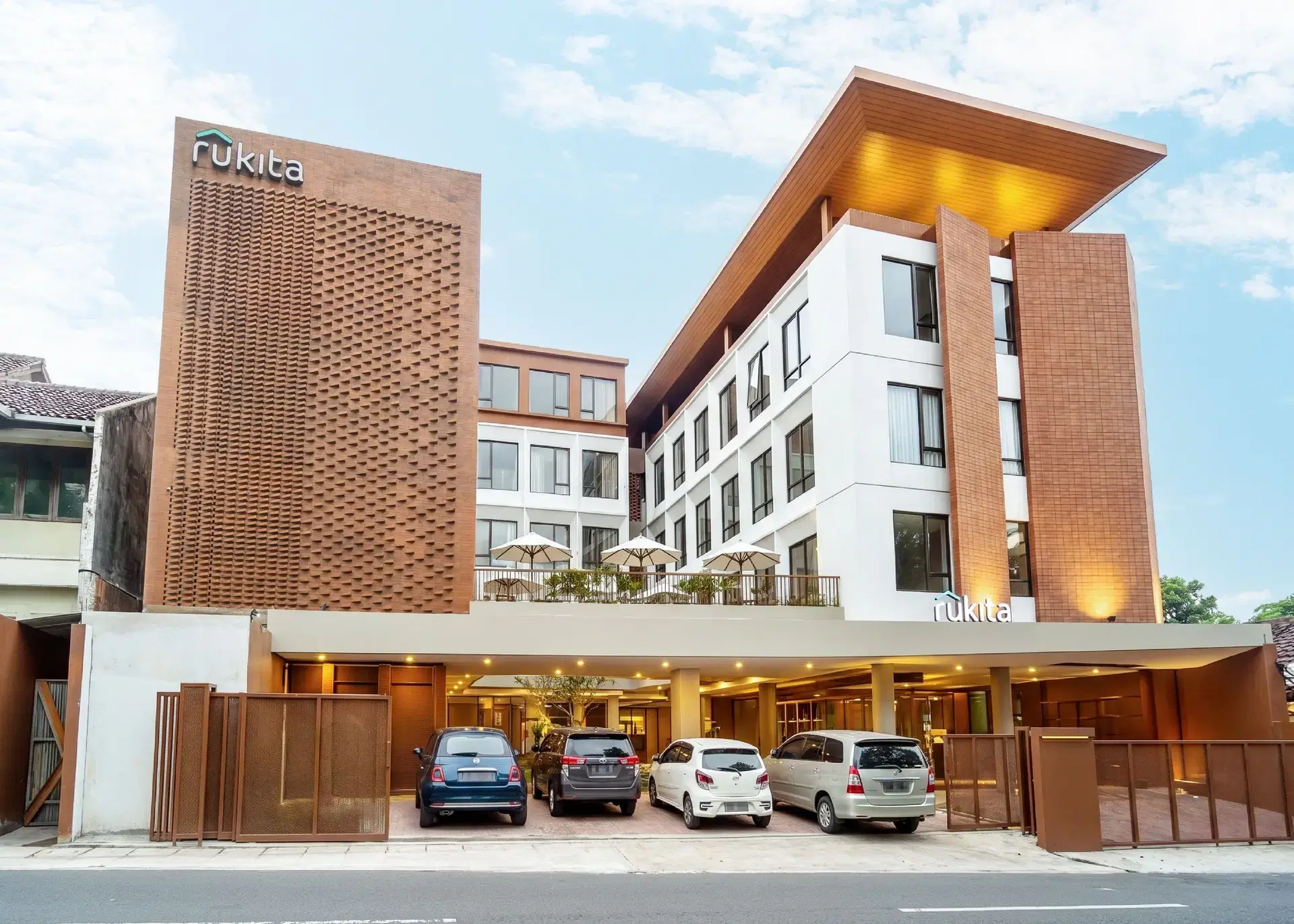
BERM Build to Rent is a development model designed to help property owners turn land or existing properties into rental-ready assets with long-term returns in mind. Operated by Rukita, BERM brings investment planning, operator-led design, construction, and property operations into one development process.
Instead of treating development and operations as separate stages, the model starts with the investment objectives and works backwards into the property design. BERM’s approach includes feasibility and financial modelling, funding and structuring options, architecture and interior design, value engineering, construction and project management, and operational planning.
This operator-led approach is particularly relevant for coliving because the decisions made during development can directly affect the property’s future rental performance. Unit mix, room layouts, shared amenities, pricing strategy, and operating requirements can be considered before construction begins, helping create an asset that is designed not only to look good but also to operate efficiently and support occupancy.
Once the property is built, BERM’s operating capabilities extend into marketing, maintenance, tenant experience, and performance monitoring. This means the focus does not stop at completing the building, the asset can continue to be managed around occupancy, revenue, operating costs, tenant satisfaction, and long-term asset value.
For property owners considering a coliving development, this creates an opportunity to approach the project as an investment rather than simply a construction exercise. The goal is to align the land, development budget, property concept, and operating model from the start so the finished building is ready to function as an income-producing rental asset.
How to Estimate ROI & Payback
Once the development cost is known, the next step is to estimate how the asset could perform financially. A basic model can be built in three steps, starting with the total capital requirement and then moving into rental revenue, operating expenses, and the resulting payback period.
Step 1 — Estimate Total Development Cost
Start with the complete capital requirement, not just construction. A simple development model could look like this:
Total Development Cost = Land + Construction + Furnishing + Professional Fees + Permits + Contingency
For example, assume an investor is developing a 500 m² coliving property:
| Component | Illustrative cost |
|---|---|
| Construction: 500 m² × Rp6 million | Rp3.0 billion |
| Furnishing & equipment | Rp450 million |
| Professional fees & permits | Rp150 million |
| Contingency | Rp360 million |
| Total, excluding land | Rp3.96 billion |
These numbers are purely illustrative. The actual budget needs to be based on the site’s location, design, specifications, and development plan.
If the land is already owned, the investor can analyse the project against the additional capital required to develop the asset. If the land is being purchased specifically for the project, its acquisition cost should be included in the investment calculation so that the projected return reflects the full capital invested.
Step 2 — Project Occupancy & Rental Income
Next, estimate how much the property can generate. Suppose the finished property contains 20 rentable rooms with an average monthly rent of Rp3.5 million.
At 100% occupancy, the property would generate:
20 × Rp3.5 million = Rp70 million/month
But assuming 100% occupancy throughout the year would make the projection unnecessarily optimistic. At an illustrative 85% occupancy, the calculation would be:
20 × Rp3.5 million × 85% = Rp59.5 million/month
That produces annual gross rental revenue of approximately
Rp59.5 million × 12 = Rp714 million/year
The same calculation can then be tested under different scenarios.
| Scenario | Occupancy | Annual gross revenue |
|---|---|---|
| Conservative | 70% | Rp588 million |
| Base case | 85% | Rp714 million |
| High occupancy | 95% | Rp798 million |
The purpose of these scenarios is not to predict actual performance. It is to understand how sensitive the investment is to occupancy.
A property that only works financially at 95% occupancy may carry a very different risk profile from one that remains viable at 70–80%.
Step 3 — Calculate Net Yield & Payback Period
Gross rental revenue is not the same as profit. Operating expenses may include property management, staff, cleaning, utilities, internet, maintenance, marketing, replacements, taxes, and other recurring costs. For a simplified illustration, assume operating expenses consume 20% of gross rental revenue.
With annual gross revenue of Rp714 million:
Rp714 million × 80% = Rp571.2 million
The simplified operating income would therefore be approximately Rp571.2 million per year. If the development cost were Rp3.96 billion excluding land:
Rp571.2 million ÷ Rp3.96 billion = 14.4%
This gives an illustrative operating yield on development cost before land and financing costs. The simple payback calculation would be:
Rp3.96 billion ÷ Rp571.2 million ≈ 6.9 years
Again, this is not a guaranteed payback period. Financing costs, taxes, land acquisition, depreciation, major renovations, vacancy periods, changes in rental rates, and unexpected capital expenditure can materially change the outcome.
That is why investors should build multiple scenarios before committing to construction. The most useful financial model is not the one with the highest projected return. It is the one that helps the investor understand what needs to happen for the project to achieve its target return and what happens if those assumptions change.
From Land to Operating Asset: The End-to-End Path
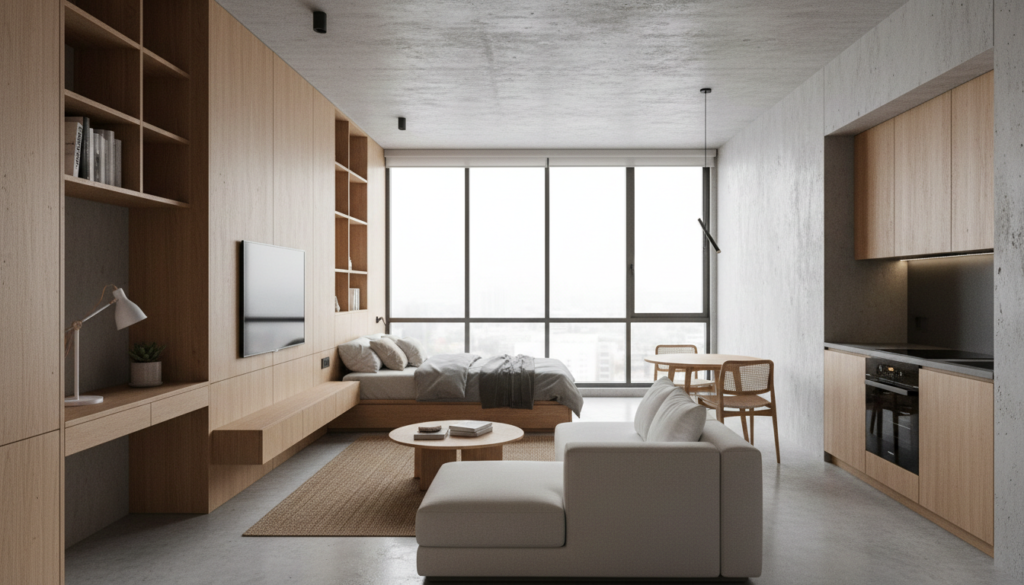
For a property owner, building a coliving asset is only the beginning. Before the property can generate rental income, it needs to move through several connected stages, from feasibility and financial planning to design, construction, marketing, leasing, and ongoing operations.
Each stage can affect the asset’s future performance. Feasibility determines whether the land and market can support the intended development, while financial modelling helps set the right development budget and return targets. Design and construction then translate those assumptions into a physical property, while marketing and operations determine how effectively the finished asset can attract and retain tenants.
This is where a Build to Rent approach can make a difference. Rather than developing a property first and figuring out how to operate it later, Build to Rent considers the investment and operating strategy from the start, with the property designed around its target market, rental potential, and long-term performance.
BERM provides an end-to-end Build to Rent approach for property owners looking to develop income-producing residential assets. The process can cover feasibility, investment planning, design, construction, and operations, with capabilities extending into marketing, maintenance, and tenant experience.
This integrated approach means decisions can be made with the finished operating asset in mind. Room mix, layouts, shared spaces, furnishing, and amenities can be planned around the target tenant, while marketing and operational requirements can be considered before the property is completed.
Once the building is ready, the focus shifts to turning it into a functioning rental business. BERM can support the asset through marketing, tenant acquisition, tenant experience, maintenance, and ongoing property operations, helping property owners move beyond simply owning a building to operating an asset built for rental performance.
For investors considering coliving in Indonesia, the question is therefore not only how much it costs to build. It is also whether the land, development strategy, property design, and operating model can work together to achieve the investment objectives.
With BERM Build to Rent, property owners can take a project from feasibility to design, build, and operation, with each stage connected to the next. The result is a more integrated path from land to a fully operating rental asset, built with long-term ROI in mind.